Who decided Russell Brand’s verdict and sentence?
The jury decided which charges were proved; the judge then decided the punishment. The police and prosecutors had different jobs.
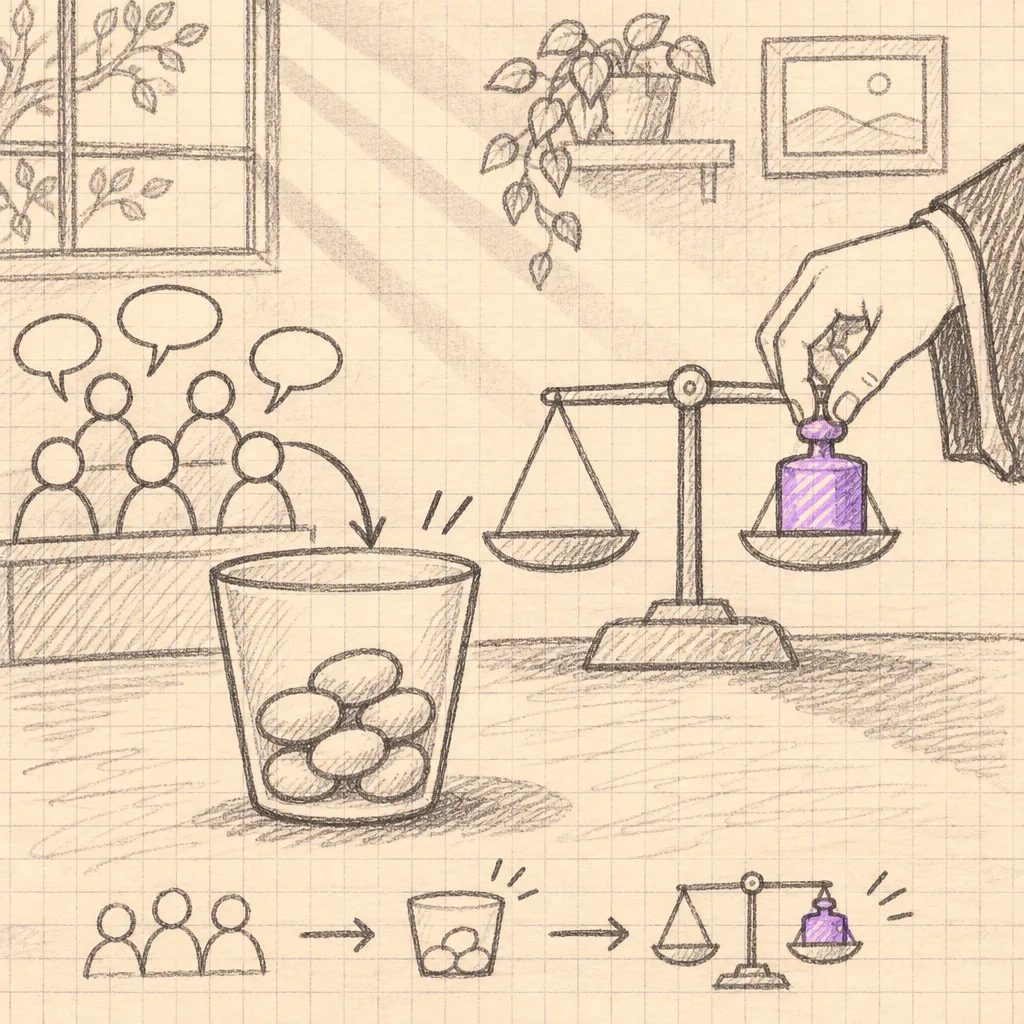
A jury found Russell Brand guilty of rape and sexual assault before a judge decided his sentence. Those were different decisions, made by different people. A jury's verdict and a judge's sentence are different decisions. Neither the police nor the Crown Prosecution Service made either decision.
The Metropolitan Police says the jury at Southwark Crown Court unanimously convicted Brand on 5 November 2026 of one rape and three sexual assaults against four women. A conviction is a finding of guilt. Brand had pleaded not guilty and maintained that the encounters were consensual.
The jury also acquitted him of three other charges: two counts of rape and one of attempted indecent assault, according to the Associated Press. A charge is a formal accusation of an offence. An acquittal is a not-guilty verdict. It means the prosecution did not prove that charge to the standard required in a criminal trial. It does not mean the jury decided that every account concerning it was false.
Both parts of the result matter. The acquittals did not cancel the convictions. Equally, the convictions did not turn the acquittals into findings of guilt. Brand was sentenced for the offences of which he was convicted, not those of which he was acquitted.
Here is how the jobs differ. Police investigate allegations and gather evidence. The Crown Prosecution Service, or CPS, decides whether to prosecute and presents the prosecution case in court. The prosecution must make the jury sure of guilt on each charge. The jury gives a verdict, its decision on whether the accused is guilty or not guilty. A guilty verdict does not set a prison term.
The judge decides the sentence: the punishment imposed after conviction. Before doing so, the judge considers the offences and their impact, as well as submissions from prosecution and defence. The Metropolitan Police says statements about the impact of the crimes were read from the four women. Those statements help the judge understand harm; they do not make the women responsible for choosing the sentence.
On 9 November 2026, Mr Justice Bennathan sentenced Brand to 10 years and six months, the CPS says. That total needs some explanation. Reuters recorded the judge imposing nine years for rape and separate terms of nine months, 18 months and eight months for the sexual assaults.
The assault terms run concurrently: that means they run at the same time as one another. Imagine three clocks starting together. The longest clock determines when that group of terms finishes. The judge made those assault terms consecutive to the rape term, which means they follow it rather than run alongside it. So, using the terms recorded by Reuters, nine years plus 18 months makes 10 years and six months. You do not add all three assault terms together.
Reuters recorded the judge saying he reduced the 18-month term from two years to take account of the overall sentence. This is known as totality: a judge considers whether the combined punishment is appropriate for all the offences, rather than treating each term in isolation.
The headline total is not a promise that every day will be spent in prison. Reuters recorded Bennathan saying Brand would serve two-thirds of the sentence in custody, with time already spent in custody counted, before release on licence. Two-thirds of the sentence reported by Reuters is seven years, before that credit. A licence means release subject to conditions; a person can be recalled to prison if those conditions are breached. It is not the same as the sentence ending.
The Metropolitan Police also says Brand will be subject to sex-offender notification requirements for life. These are duties to give the police certain personal information. They are separate from the prison sentence and do not make it a life sentence.
There is another important boundary. The Metropolitan Police told Sky News that a separate investigation into rape allegations made by two other women remains open. Those allegations were not decided by this jury and are not further convictions. An investigation can lead to different outcomes; it is not itself a verdict.
Who benefits from a clear account? The women have a formal record of the convictions and, as the CPS says, lifelong anonymity. The CPS also says the sentence cannot undo the harm they have lived with. Brand has the benefit of the acquittals, and imprisonment affects him and his family. Government guidance says someone convicted in the Crown Court can apply for permission to appeal against a conviction, a sentence or both. Permission is not automatic, and an application is not itself an overturned decision.
The police and CPS can point to the convictions as an outcome of their work. Their accounts have a focus: neither Metropolitan Police release about the verdict or sentencing mentions the acquittals reported by the Associated Press. That omission does not change the court result, but a reader relying only on those releases would miss part of it. Institutions benefit when their account is treated as the whole story; readers pay in understanding when they must guess what is missing.
Glossary: A verdict is the jury’s decision on a charge; a conviction is a guilty verdict; an acquittal is a not-guilty verdict; concurrent terms run together; consecutive terms follow one another; a licence is conditional release before a sentence ends.
What it means for you: when you read a court headline, ask three questions. What did the jury decide? What punishment did the judge impose? And are any other allegations still only under investigation? The answers keep a conviction, an acquittal and an unanswered allegation in their proper places.

Keep going
 Law
When does a Scottish Act actually take effect?
The building safety levy shows why an Act can become law months before ministers bring particular parts into force.
 Law
Who can change Scotland’s tribunal deadlines?
A new order shows how a power granted at Westminster can be exercised by Scottish Ministers, with approval from both governments and Holyrood.
 Law
Who Decides What Happens in a Criminal Trial
A Palestine Action case offers a lesson in charging, evidence, reporting restrictions and the difference between a document and a claim about it.