Reports say Israeli soldiers demolished the Lebanese journalist’s house, but the reason for the decision and its legality require separate evidence.
· 4 min read
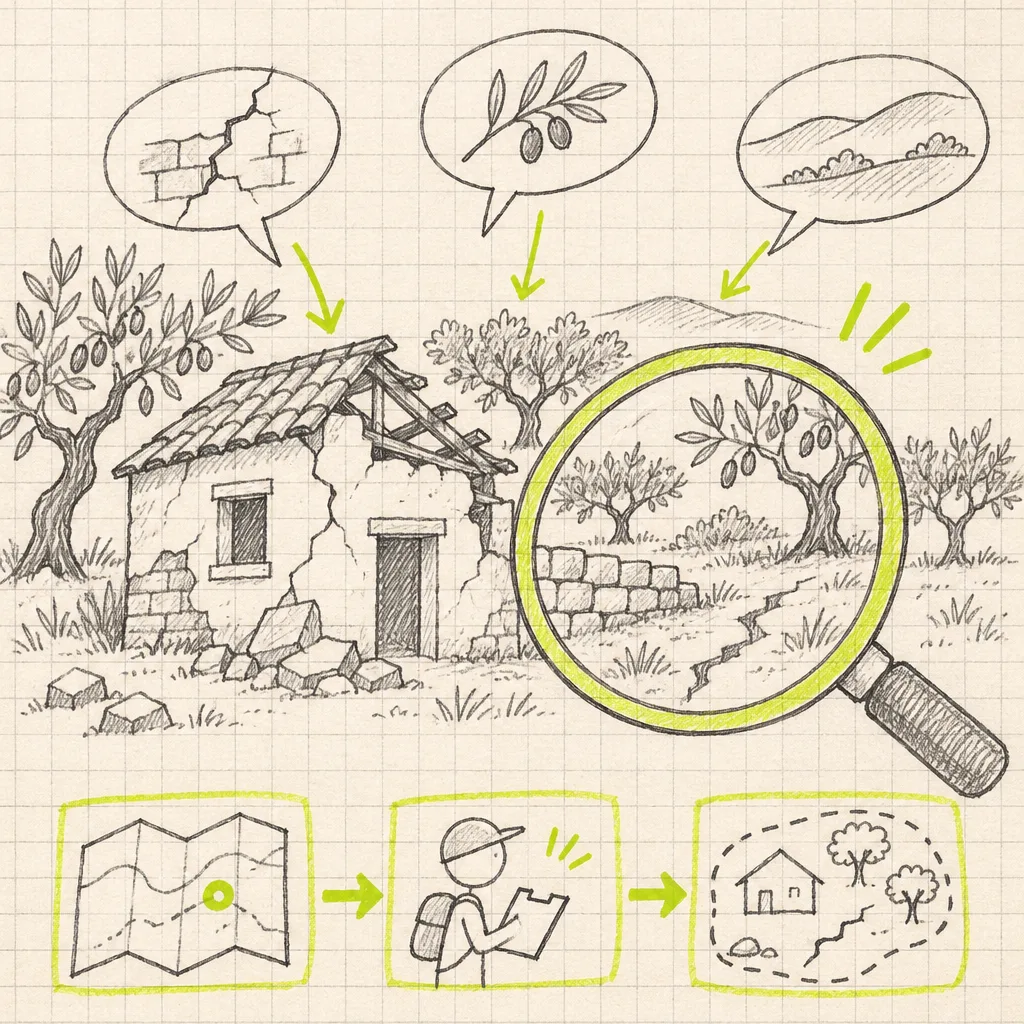
Illustrate a damaged house beside olive trees, with a magnifying glass examining its surroundings, and no text in the image.
Lebanese journalist Radwan Mortada says Israeli soldiers destroyed his family home in Aita al-Jabal on 17 October 2026. His account describes soldiers entering the property, taking possessions and planting explosives. The house stood near olive trees planted by his father and grandfather; it was also a place where the family remembered Mortada’s late brother.
The Grayzone reports that footage it reviewed shows soldiers occupying, looting and destroying the house. Separately, L’Orient Today reported on the day of the demolition that its southern Lebanon correspondent said Israeli forces had destroyed Mortada’s home and other houses in the village. That second report supports the account of a demolition, though it does not establish why this particular house was chosen.
Mortada suspects a connection to The Trap, his Al Jazeera 360 documentary about Israel’s 2024 pager attacks in Lebanon. Retaliation means harming someone in response to something they have done: here, the suggested reason would be his reporting. Mortada also says he has no concrete evidence of that motive. The Grayzone reports that the Committee to Protect Journalists condemned the demolition and feared it was retaliation.
The family bears the loss of the home and, according to Mortada, its contents. The caretaker and his family were forced to leave, he says. If journalists’ homes are targeted because of their work, the threat could discourage other reporting. But proving this house was demolished is not the same as proving that was the reason.
The White House called the freed hostage an American citizen, while The Grayzone reported the opposite. Neither account gives readers the underlying record.

 Media literacy
 Media literacy
 Media literacy