What a dairy contract case tells us about fairness
A farmer secured clearer terms without a formal complaint, but the adjudicator’s annual reports show why one result cannot establish wider change.
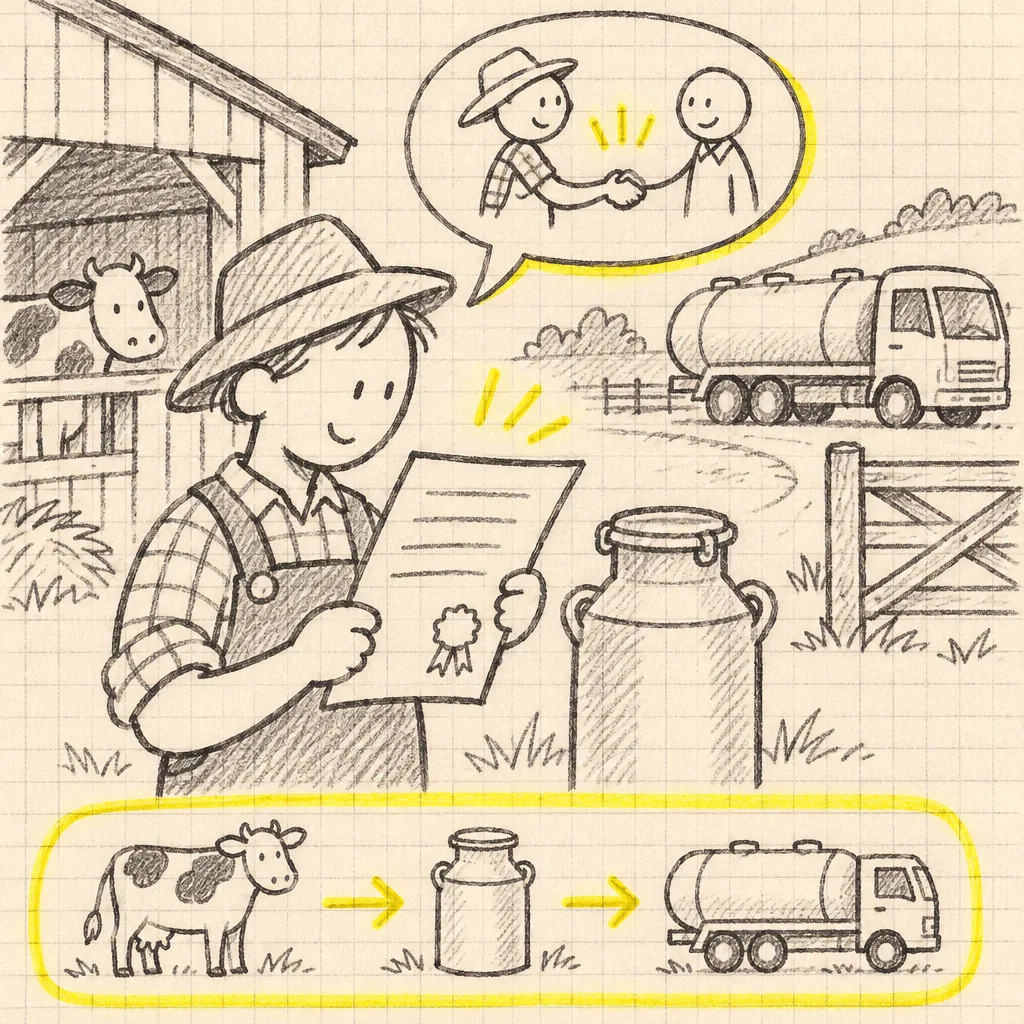
A dairy farmer gained clearer terms for selling surplus milk after the Agricultural Supply Chain Adjudicator raised a concern with the buyer, according to the Department for Environment, Food and Rural Affairs.
The adjudicator is an official who can investigate certain complaints about farm purchase contracts. Richard Thompson’s office says it approached the milk processor, a business that buys and handles raw milk, without identifying the farmer. The processor revised its proposed contract to make clear that surplus milk could be sold elsewhere.
Why might a farmer need help with that? Imagine your milk is collected by a buyer on whom your income depends. A contract appears to restrict sales to anyone else. You might want to challenge the wording but worry that upsetting your buyer could put your own business at risk. Thompson’s second annual report says farmers still report being reluctant to raise issues for fear of losing contracts.
The government’s announcement presents the case as an example of problems being resolved early. Farming Minister Stephen Morgan also links fair contracts to a productive and profitable sector. The individual result matters to the farmer. It does not, by itself, show that farms across the sector are more profitable or have more bargaining power.
The distinction between advice and a complaint matters here. Anyone can raise a concern confidentially with the adjudicator, including anonymously. The office can explain the general rules and, where appropriate, discuss an issue with a buyer without naming its source. It cannot open a formal investigation on that information alone.
A formal complaint is a producer’s request for the adjudicator to examine an alleged breach of the rules. The form asks for evidence and whether compensation is sought. The adjudicator can then assess the complaint and investigate. If a breach is found, the buyer may be ordered to pay a penalty or compensation. A complaint does not guarantee either outcome.
Who made those rules? Parliament gave ministers powers under the Agriculture Act 2020. Ministers then made separate milk and pig regulations, which set legal requirements for covered contracts. The adjudicator’s office enforces them; ministers and Parliament can change the legal framework. The rules do not set the price a farmer must receive, Thompson’s second report says.

Keep going
 Media literacy
What a Companies House entry can tell you
The agency’s verification target counts more than completed checks, while an entry on its public register is not a guarantee of accuracy.
 Media literacy
What the Edan Alexander citizenship claims prove
The White House called the freed hostage an American citizen, while The Grayzone reported the opposite. Neither account gives readers the underlying record.
 Media literacy
How to read a business payment request
A government warning about unsolicited invoices raises three separate questions: who sent the request, what it offers and whether payment is required.