What a Nepal funding plan proves and what it does not
US records confirm a political assistance programme, but a plan naming future leaders is not proof that it put them in power.
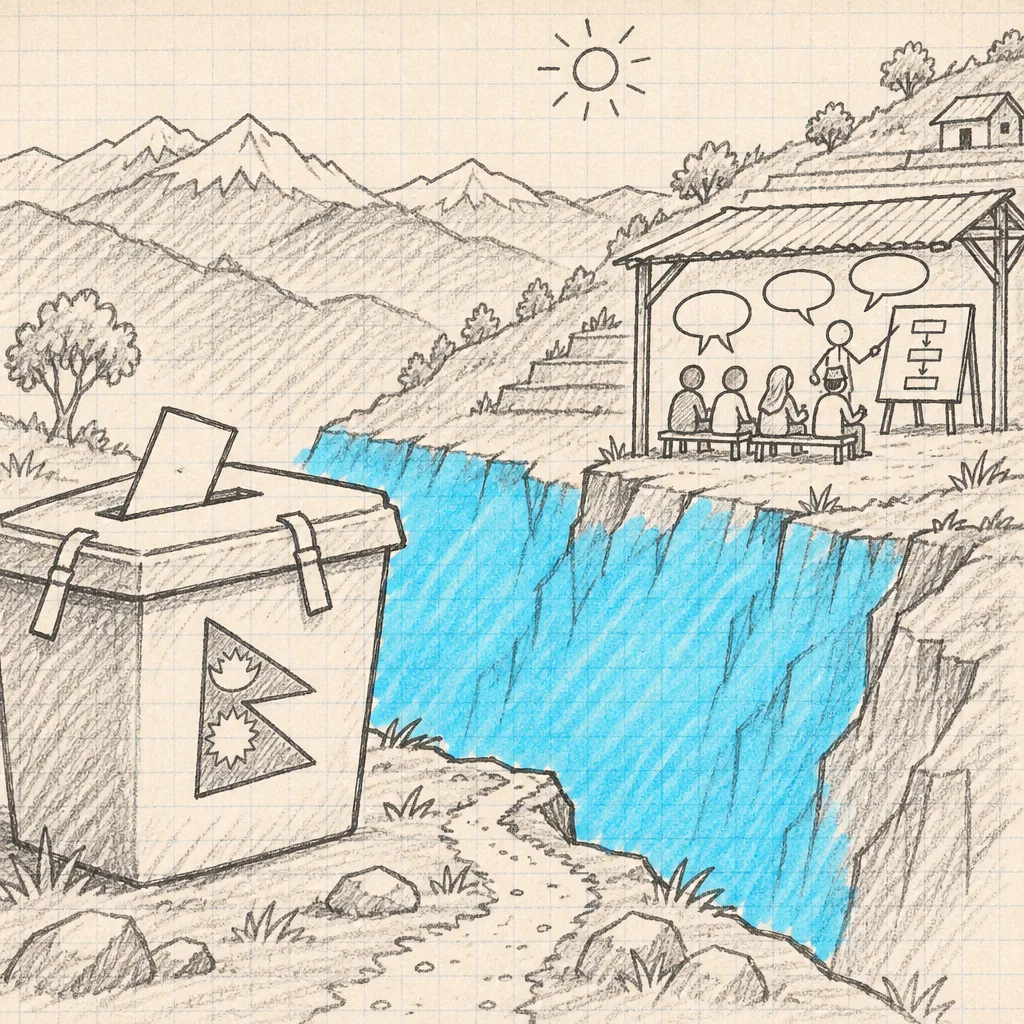
The US government funded a political assistance programme in Nepal that planned to work with parties, parliament and the election authorities, according to an archived US Agency for International Development fact sheet.
The Grayzone says a leaked work plan shows that the programme intended to support people who later became Nepal’s leaders, including Prime Minister Balen Shah and party leader Rabi Lamichhane. It links that intended support to the protests that brought down a government, the election that followed and criticism of Shah’s response to the Trishuli valley disaster.
Those are different claims. A plan naming someone is evidence of an intention to approach or assist them, if the document is genuine. It does not establish that they attended a session, received money, followed instructions or won an election because of foreign help.
The programme was called Niti Sambad, or Policy Dialogue. The USAID fact sheet describes the Consortium for Elections and Political Process Strengthening, known as CEPPS, as the group running it. A consortium is a group of organisations working together; here, its members were the International Republican Institute, the National Democratic Institute and the International Foundation for Electoral Systems. The fact sheet says they planned work ranging from voter education to support for political parties.
The US government’s spending record names USAID as the funder. It records about $20.9 million committed and about $12.5 million in outlays for the award. A commitment is money the government has agreed to provide; an outlay is money paid out. Neither figure tells you what an individual politician received. The record gives the award period as 3 July 2017 to 2 August 2024.
The Grayzone calls CEPPS an offshoot of the National Endowment for Democracy, a US-funded organisation that supports political and civic groups abroad. The Kathmandu Post reports that the Republican and Democratic institutes receive endowment funding, but that the accounting page reproduced by The Grayzone names USAID’s Nepal mission for this programme. Shared funders or partners do not make the organisations interchangeable.
Some assistance was delivered. A USAID-commissioned mid-term evaluation reported training and support to Nepal’s Election Commission, while finding mixed performance against targets. That is stronger evidence than a plan alone, but it does not establish that Shah or the other named politicians took part.
Nepalese voters also made a decision. The House of Commons Library reports that Shah’s party won a parliamentary majority in the election of 5 March 2026. President Ram Chandra Paudel appointed Shah prime minister on 27 March 2026, after the vote. A foreign programme’s attempt to influence politics deserves scrutiny; it does not erase voters’ choices.

Keep going
 Media literacy
What a terrorism delisting does and does not prove
US records confirm that Abdullah Muhaysini was removed from a sanctions list, but the decision is not a verdict on allegations against him.
 Media literacy
How to check the new birth registration rules
An explanatory note points readers to the wrong parts of the regulations, making it a useful test of where legal rules come from.
 Media literacy
What a Companies House entry can tell you
The agency’s verification target counts more than completed checks, while an entry on its public register is not a guarantee of accuracy.