How Scotland changed its childcare income limit
The new limit is now law, but councils had already been using it to offer some families funded places.
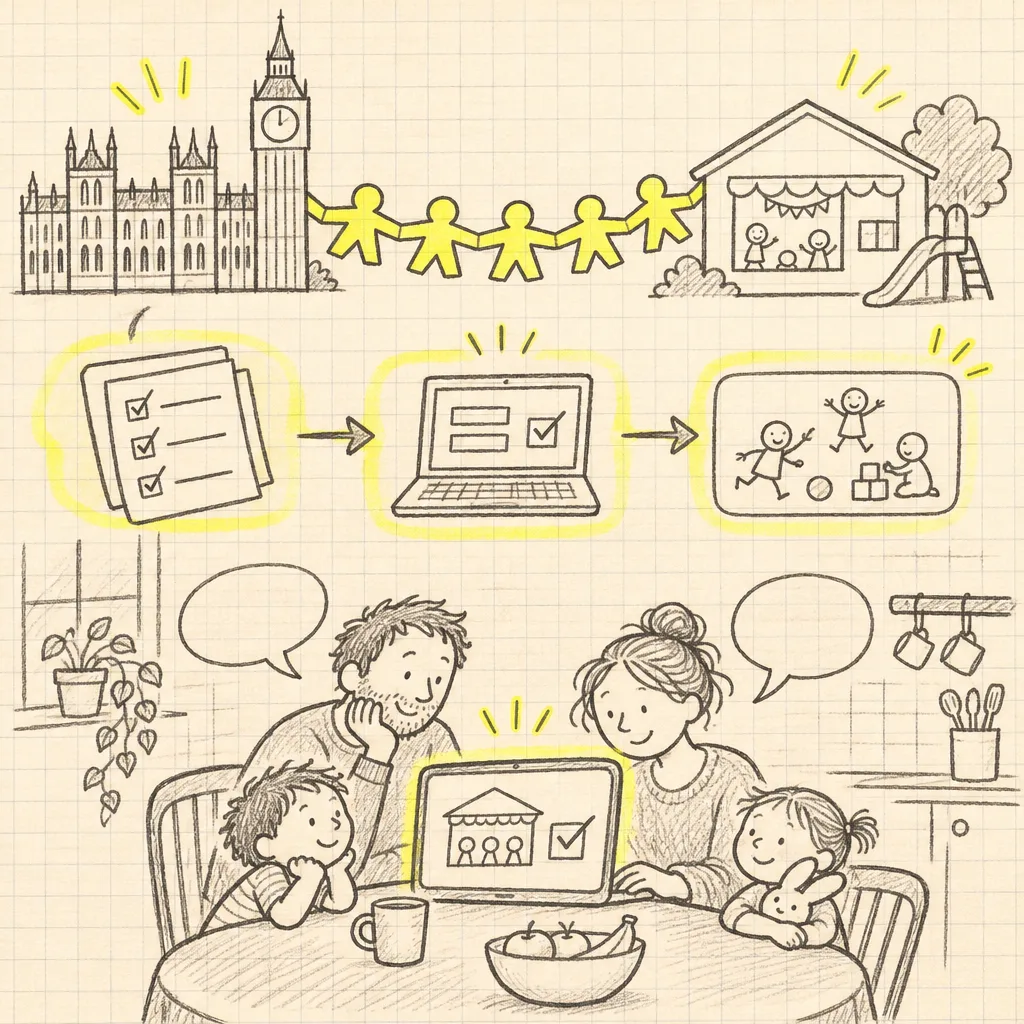
A Scottish Order that took effect on 5 November 2026 raises an income limit used to decide whether some young children qualify for funded childcare. The Order replaces the previous £850 limit with £885 for a Universal Credit assessment period.
The change is a useful way to see how a number becomes a legal rule. It also shows why an eligibility announcement is not the same thing as a complete guide for a family.
Start with an example. Imagine a parent receiving Universal Credit, the benefit that helps with living costs, whose relevant income in the assessment period before applying is above the old £850 limit but below the new £885 limit.
The family now meets this part of the statutory test. But income alone does not establish that their child qualifies. The child's age, their circumstances and the rules on when a place can start matter too.
There is another important detail. Councils had already been applying the higher limit before the Order was made. They did so using discretion: a power to provide childcare beyond the minimum the law requires. The November Order brings the legal entitlement into line with that practice.
To understand the difference, we need the law behind the number. An Act is a law passed by a parliament. The Children and Young People (Scotland) Act 2014 places a duty on education authorities, generally the local council, to make a set amount of early learning and childcare available for eligible children in their area. Early learning and childcare means care and learning for young children, such as a funded nursery place.
Section 47 of the Act sets out basic conditions. A child must be under school age and must not have started primary school, although attending a nursery class in a primary school does not count as starting school. The Act also identifies some eligible children directly, including certain children with experience of being looked after by a council.
The same section gives Scottish Ministers power to specify further eligible children by making an Order. An Order is a form of secondary legislation: a legal rule made using powers granted by an Act. Here, the earlier Provision of Early Learning and Childcare (Specified Children) (Scotland) Order 2014 sets out further groups and conditions, including routes for some children aged two.
Think of the Act as granting the power and establishing the duty, and the earlier Order as filling in more of the eligibility detail. Ministers cannot use this power to rewrite any law they choose. They must act within the authority Parliament gave them.
The latest Order changes the earlier one rather than replacing it. In its definition of a qualifying benefit, meaning a benefit that can count towards eligibility, the new Order directs that each occurrence of £850 is replaced with £885. The other conditions in the Act and the earlier Order still matter.
Who decides whether that change can happen? Ministers propose it, but section 99 of the Act requires parliamentary approval before this kind of Order is made. This is called the affirmative procedure: the Scottish Parliament must actively agree to the draft, rather than the rule taking effect without that approval.
The committee's report says the draft was laid before Parliament. The Education and Gaelic Committee heard from Brown and recommended approval. Its official report records that members asked no questions before agreeing to recommend it.
A committee recommendation is not the same as approval by the whole Parliament. The parliamentary record shows that members approved the draft as part of a group of motions agreed together. The made Order then records that approval and bears Brown's signature, authorised by Scottish Ministers, on 4 November 2026.
The last step is commencement, the date a legal rule starts to have effect. The Order says it comes into force the day after it is made. That made 5 November 2026 the date the replacement took legal effect. Approval allowed ministers to make the Order; it did not itself set the new limit running.
Why that figure? The Scottish Government's policy note says the increase follows the rise in the National Living Wage, the legal minimum hourly wage for eligible workers aged 21 and over. The limit is set at roughly what someone working part-time at that wage would earn. This explains the choice; it does not show whether the increase kept pace with the wider cost of living.
The policy note says modelling suggested the eligible population would fall if the limit were not raised. That is an estimate of a fall under a different policy, not a count of children who will take up a place because of this Order. The note also says ministers expect no material effect on councils' ability to pay within their existing funding settlement; it does not give a separate cost for the change.
Public funding pays for the entitlement, with councils responsible for making it available. Families who meet the conditions can benefit, but the Order does not tell you whether a particular nursery has a suitable vacancy or hours. A legal entitlement is important; so is being able to use it.

Keep going
 How it works
How a minister set a planning examination charge
The new daily amount shows how an Act of Parliament can give ministers power to make detailed rules, subject to parliamentary scrutiny.
 How it works
Who gets to speak at a planning examination?
New rules set out how residents can contribute to examinations of regional planning strategies in England, but an invitation to speak is not guaranteed.
 How it works
Who decides a property's business rates label?
New Welsh rules make a property's official description important to its bill, but different bodies write the rules, keep the record and collect the tax.